
The Shocking Tooth About Sugarless Gum
What Did That "5th Dentist" Say?

Remember those Trident ads from the 70s promoting the benefits of sugarless gum? I was a serious Trident chewer back then. Still, I always wondered about that dentist survey.
Why, I asked myself, did only four out of five dentists recommend sugarless gum “for those who chew gum?” What about the twenty percent of dentists—one out of that five— who did not recommend it? Why not? And what did they recommend?
Still wondering, I decided to look into this—albeit 50 years later. What I found suggests that it might have been wise, then as well as now, to listen to the fifth dentist.
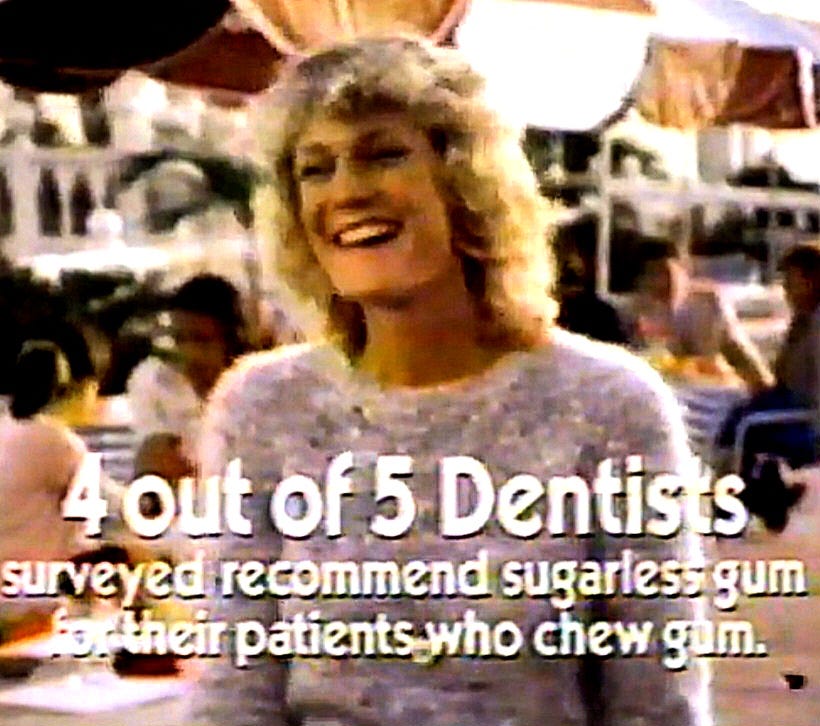
Obviously, I couldn't ask the twenty percent of dentists in that survey (If there even was a statistically meaningful survey done back then. I always suspected that the actual survey consisted of just five dentists, one of whom did not recommend sugarless gum.)
What I have done is track down some of the reasons dentists then—and now—might have good reasons for not recommending sugarless gum. You're welcome.
Digestive issues
Sugarless gums are typically sweetened with sugar alcohols like sorbitol, mannitol, or xylitol, which the small intestine struggles to fully absorb. Consumed in high amounts, they pull water into your bowels, acting as a laxative that can cause severe abdominal cramps, bloating, gas, and chronic diarrhea.
Sugar alcohols also belong to a group of short-chain carbohydrates known as FODMAPs. People with Irritable Bowel Syndrome (or sensitive digestive tracts) are highly susceptible to flare-ups from even small amounts of these sweeteners.
The physical act of constant chewing causes you to repeatedly swallow small pockets of air. This can lead to excess gas, abdominal distension, and continuous bloating.
NOTE: Xylitol is highly toxic to dogs and can cause adverse reactions in cats.
Jaw issues
Your jaw joints and surrounding muscles are not designed for hours of continuous, repetitive chewing. Overusing them can lead to temporomandibular disorders (TMD), causing jaw soreness, clicking or popping sounds, and facial muscle fatigue.
Many people unconsciously chew gum predominantly on one side of their mouth. Over time, this strain can cause jaw misalignment, muscle hypertrophy, and uneven tooth wear.
Headaches
The constant contraction of muscles in your jaw can create severe muscle fatigue. This tension frequently radiates upward and can trigger stress headaches or migraines in susceptible individuals.
Dental damage
Many fruit-flavored sugarless gums use citric acid or other acidic preservatives to achieve a tart flavor. This acid can slowly erode tooth enamel over time, causing tooth sensitivity.
Constant friction can impact dental work. Excessive chewing forces can sometimes loosen or chip older fillings, crowns, or bridges.
False sense of hygiene
Chewing sugar-free gum stimulates saliva, which helps neutralize plaque acids. But some people may use it as a psychological shortcut to skip brushing or flossing. Gum cannot physically remove structural plaque or debris stuck between teeth.
I'm not going to tell you not to chew sugarless gum. I do it myself. And on occasion I chew gums with sugar.
But to get the dental benefits of sugarless without the downsides, dental professionals recommend limiting your chewing time to 10 to 20 minutes right after a meal.
Of course, any amount of chewing is better than resorting to smoking or vaping, which I’m sure that zero out of five dentists recommend.
I don't chew gum - very rarely did in the past. But I drink wine. Red. That can be detrimental to teeth, never mind the liver.
I vape. Don't think deaths from that measure up anywhere near four out of five of those that die from smoking.
Honestly, tiresome are all the warnings about how the simple joys of life are bad for the body. Let's go offf grid and live a few more years as miserable old gits.